Blog
Film Index
Sensational Bauer: Lost and Found
When we began working on the database of early films in 2021, one of our principal goals was to make it a useful tool for film archivists. The vast majority of films produced in the Russian Empire are considered lost, and those working in the field always hope that more films may yet be identified in archives. Our database makes more than 6900 images related to these films available online, and these can serve as reference images for archivists and scholars seeking to identify films presumably produced in Russia. We are very happy that this goal has already begun to be realized: the database has helped to identify at least two films.
The first film was identified even before the database officially launched online. In 2022, Andrea Meneghelli, Head of Film Archives at Cineteca di Bologna, drew attention to nitrate film cans from a private collection labeled VOLGA E SIBERIA. These cans did indeed contain parts of Volga i Sibir’ / Volga and Siberia (1914, director Vasily Goncharov), but Meneghelli noticed that several sections came from another film. He shared several frames from this unknown film with historian and archivist Peter Bagrov. Since Bagrov has served on the database advisory board and worked closely with us, he sent these frames to me in the hope that they might match images we had been collecting for the database.
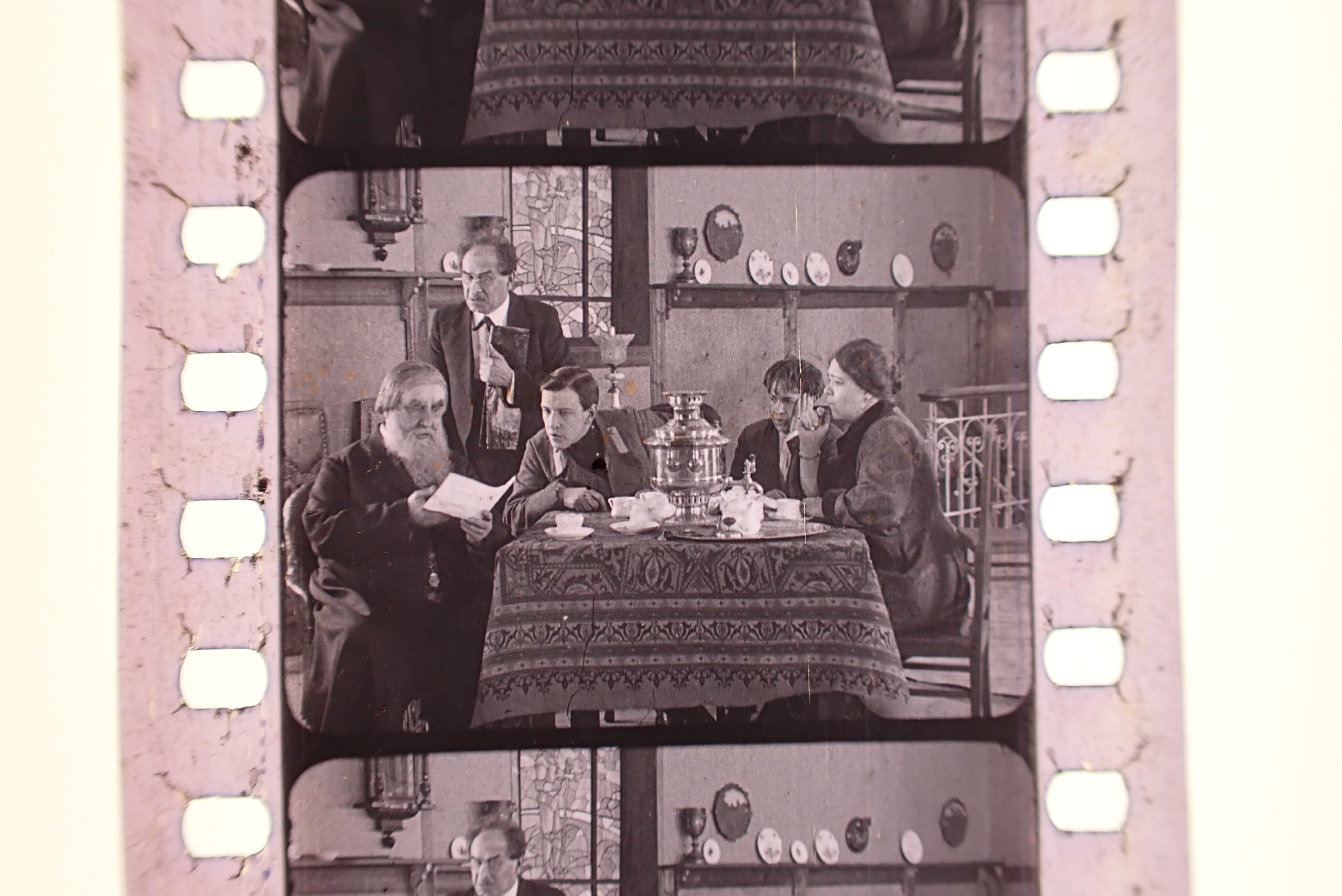
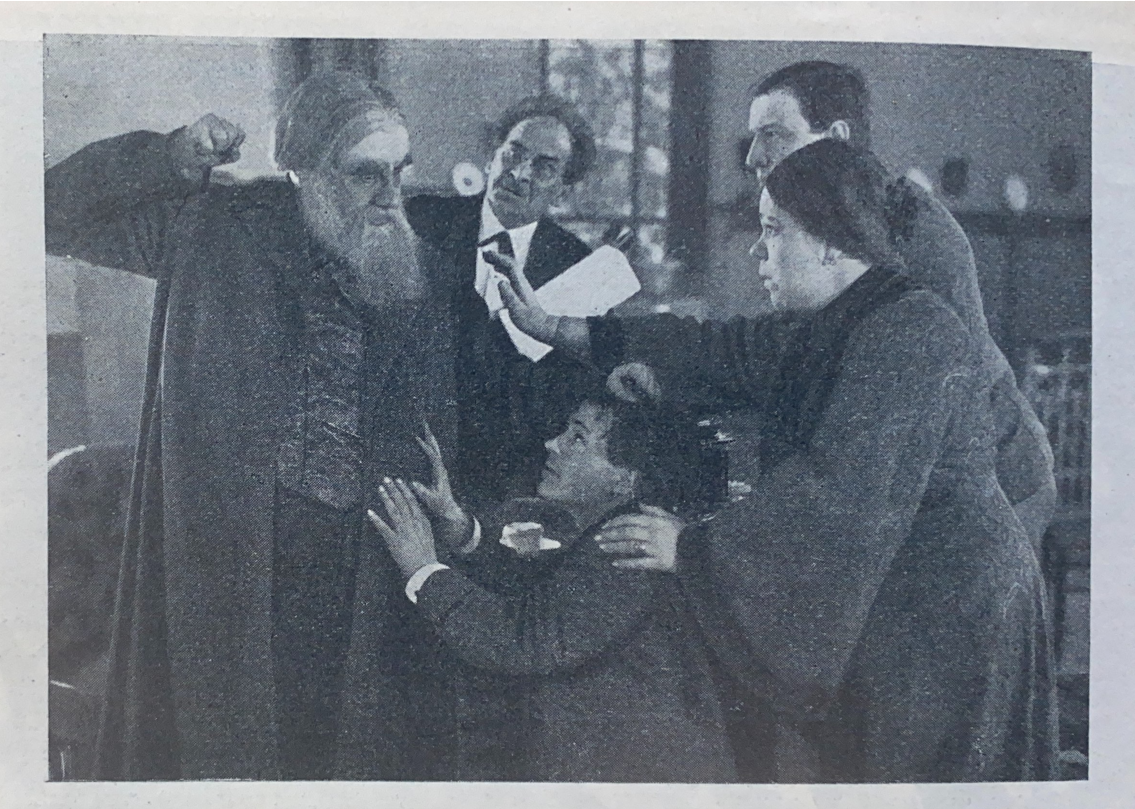
Indeed, one of the frames (Fig. 1) proved close in mise-en-scène and composition to a promotional photograph (Fig. 2) for Pokhozhdeniia Speiera i ego shaiki “chervonnykh valetov” / The Adventures of Shpeier and His “Jacks of Hearts” Gang (1915, director Evgenii Bauer). We also had an original synopsis (libretto) of the film, and upon comparing it to the Italian intertitles, it became clear that portions of the unidentified material came from Pokhozhdeniia Speiera.¹
Bauer is best known as a director of salon melodramas, many of which have become central to the canon of pre-revolutionary cinema. The discovery of a sensational melodrama directed by him significantly broadens our understanding of this crucial director and of the genre’s development in the Russian Empire.
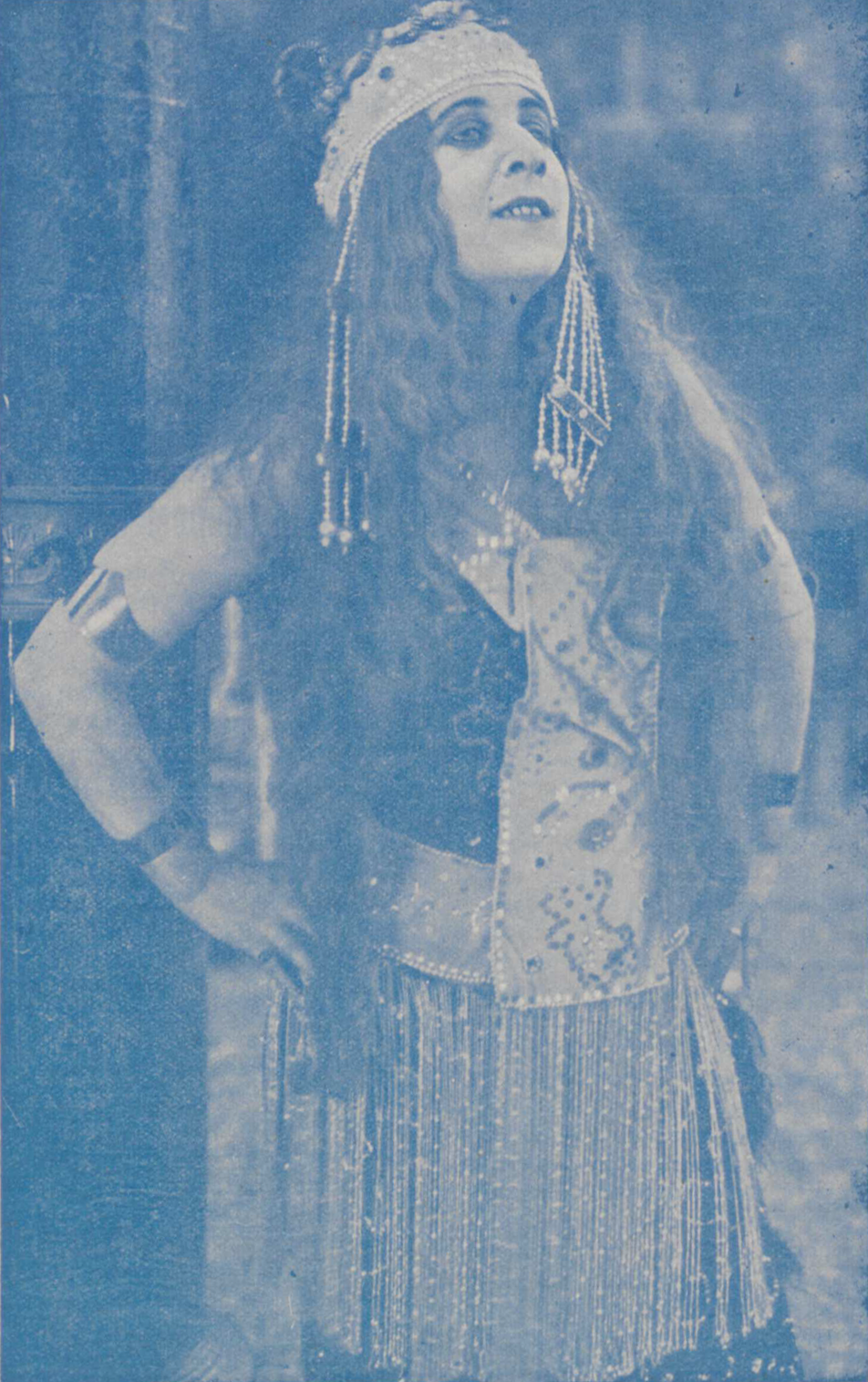
The film was based on the real criminal case of the Jacks of Hearts Club, which operated in the Russian Empire from 1871 to 1875. This criminal organization was at one point associated with the legendary female thief and trickster Son’ka the Golden Hand, who soon entered Eastern European popular culture. A series of Son’ka’s adventures was adapted for the screen by producer Aleksandr Drankov starring Nina Goffman. This heroine would have made a great addition for the groundbreaking Cinema’s First Nasty Women collection curated by Maggie Hennefeld, Laura Horak, and Elif Rongen-Kaynakçi if it included material from the Russian Empire.² The Khanzhonkov studio likely sought to share in the commercial success of this series and responded with its own sensational drama featuring Son’ka. In Bauer’s film, Son’ka was played by Nadezhda Nelskaia.
In Russia, sensational melodrama was often considered a “low” genre that rarely attracted serious critical attention. Yet Pokhozhdeniia Speiera received a relatively detailed review in the leading trade journal Sine-Fono. Samuil Lurie, the journal’s editor and founder, wrote:
“The picture is made with great skill. […] To diversify the action, the film includes interpolated scenes, such as the debauchery at the Yar restaurant, with all its trimmings, from the Gypsy chorus to chanteuses bathing in champagne… All in all, setting aside its ‘ideological’ dimension, the film proves highly entertaining, capable of keeping the spectator amused throughout its full 1,500 meters…”³
Lurie obviously did not approve of Bauer’s experiments with this “improper” genre, yet he acknowledged their success. The Yar scene he mentioned had probably been added not only for narrative variety but also to give room to test Bauer’s innovative visual techniques. Similarly, when reflecting on Bauer’s canonical melodrama Deti veka / Children of the Age ( 1915), several critics singled out the carnival-on-water scene as one of the film’s key artistic elements, even while interpreting it in different ways.⁴ [Clip 1]
The surviving 15 minutes of the film were digitally restored and shown at Il Cinema Ritrovato in 2025. With the kind permission of Cineteca di Bologna, the film is scheduled to be screened at the Association for Slavic, East European, and Eurasian Studies convention in Chicago in November 2026 (pending final conference committee approval).
The database materials recently helped to identify one more film. A Zhidovka-vykhrestka / Jewish Apostate (1912, director Vladimir Krivtsov) was identified at the Cinémathèque Française, and this discovery will be featured in the next post in the Daydreams for Archives series.
If you have identified a film using our materials, or think the database may help you do so, please feel free to reach out. We would love to hear from you.
I sincerely thank Andrea Meneghelli for sharing materials on the print of Pokhozhdeniia Speiera with me and for his continued support.
Suggested Citation
Kovalova, Anna. “Sensational Bauer: Lost and Found.” In Daydreams Database: Cinema of the Russian Empire and Beyond, edited by Anna Kovalova, developed by Alexander Grebenkov, 2026. URL: https://daydreams.museum/en/blog/sensational-bauer-lost-and-found/.
Sensational Bauer: Lost and Found
When we began working on the database of early films in 2021, one of our principal goals was to make it a useful tool for film archivists. The vast majority of films produced in the Russian Empire are considered lost, and those working in the field always hope that more films may yet be identified in archives. Our database makes more than 6900 images related to these films available online, and these can serve as reference images for archivists and scholars seeking to identify films presumably produced in Russia. We are very happy that this goal has already begun to be realized: the database has helped to identify at least two films.
The first film was identified even before the database officially launched online. In 2022, Andrea Meneghelli, Head of Film Archives at Cineteca di Bologna, drew attention to nitrate film cans from a private collection labeled VOLGA E SIBERIA. These cans did indeed contain parts of Volga i Sibir’ / Volga and Siberia (1914, director Vasily Goncharov), but Meneghelli noticed that several sections came from another film. He shared several frames from this unknown film with historian and archivist Peter Bagrov. Since Bagrov has served on the database advisory board and worked closely with us, he sent these frames to me in the hope that they might match images we had been collecting for the database.
Indeed, one of the frames (Fig. 1) proved close in mise-en-scène and composition to a promotional photograph (Fig. 2) for Pokhozhdeniia Speiera i ego shaiki “chervonnykh valetov” / The Adventures of Shpeier and His “Jacks of Hearts” Gang (1915, director Evgenii Bauer). We also had an original synopsis (libretto) of the film, and upon comparing it to the Italian intertitles, it became clear that portions of the unidentified material came from Pokhozhdeniia Speiera.¹
Bauer is best known as a director of salon melodramas, many of which have become central to the canon of pre-revolutionary cinema. The discovery of a sensational melodrama directed by him significantly broadens our understanding of this crucial director and of the genre’s development in the Russian Empire.
The film was based on the real criminal case of the Jacks of Hearts Club, which operated in the Russian Empire from 1871 to 1875. This criminal organization was at one point associated with the legendary female thief and trickster Son’ka the Golden Hand, who soon entered Eastern European popular culture. A series of Son’ka’s adventures was adapted for the screen by producer Aleksandr Drankov starring Nina Goffman. This heroine would have made a great addition for the groundbreaking Cinema’s First Nasty Women collection curated by Maggie Hennefeld, Laura Horak, and Elif Rongen-Kaynakçi if it included material from the Russian Empire.² The Khanzhonkov studio likely sought to share in the commercial success of this series and responded with its own sensational drama featuring Son’ka. In Bauer’s film, Son’ka was played by Nadezhda Nelskaia.
In Russia, sensational melodrama was often considered a “low” genre that rarely attracted serious critical attention. Yet Pokhozhdeniia Speiera received a relatively detailed review in the leading trade journal Sine-Fono. Samuil Lurie, the journal’s editor and founder, wrote:
“The picture is made with great skill. […] To diversify the action, the film includes interpolated scenes, such as the debauchery at the Yar restaurant, with all its trimmings, from the Gypsy chorus to chanteuses bathing in champagne… All in all, setting aside its ‘ideological’ dimension, the film proves highly entertaining, capable of keeping the spectator amused throughout its full 1,500 meters…”³
Lurie obviously did not approve of Bauer’s experiments with this “improper” genre, yet he acknowledged their success. The Yar scene he mentioned had probably been added not only for narrative variety but also to give room to test Bauer’s innovative visual techniques. Similarly, when reflecting on Bauer’s canonical melodrama Deti veka / Children of the Age ( 1915), several critics singled out the carnival-on-water scene as one of the film’s key artistic elements, even while interpreting it in different ways.⁴ [Clip 1]
The surviving 15 minutes of the film were digitally restored and shown at Il Cinema Ritrovato in 2025. With the kind permission of Cineteca di Bologna, the film is scheduled to be screened at the Association for Slavic, East European, and Eurasian Studies convention in Chicago in November 2026 (pending final conference committee approval).
The database materials recently helped to identify one more film. A Zhidovka-vykhrestka / Jewish Apostate (1912, director Vladimir Krivtsov) was identified at the Cinémathèque Française, and this discovery will be featured in the next post in the Daydreams for Archives series.
If you have identified a film using our materials, or think the database may help you do so, please feel free to reach out. We would love to hear from you.
I sincerely thank Andrea Meneghelli for sharing materials on the print of Pokhozhdeniia Speiera with me and for his continued support.
Suggested Citation
Kovalova, Anna. “Sensational Bauer: Lost and Found.” In Daydreams Database: Cinema of the Russian Empire and Beyond, edited by Anna Kovalova, developed by Alexander Grebenkov, 2026. URL: https://daydreams.museum/en/blog/sensational-bauer-lost-and-found/.