Blog
Elizaveta Svilova and Meyerhold’s The Picture of Dorian Gray
Elizaveta Svilova is among the best-known film editors of Soviet cinema. Her name is inseparable from that of her husband, director Dziga Vertov: she worked with him throughout his career and, according to modern scholarship, was the co-author of his films. Yet the story of Svilova before Vertov remains almost unknown. She was one of the barely visible figures who connected two cinematic worlds: pre-revolutionary silent cinema and new avant-garde cinema that emerged after 1917. Her career allows us to see how technical routines of early film production were transformed into a creative language of Soviet montage.
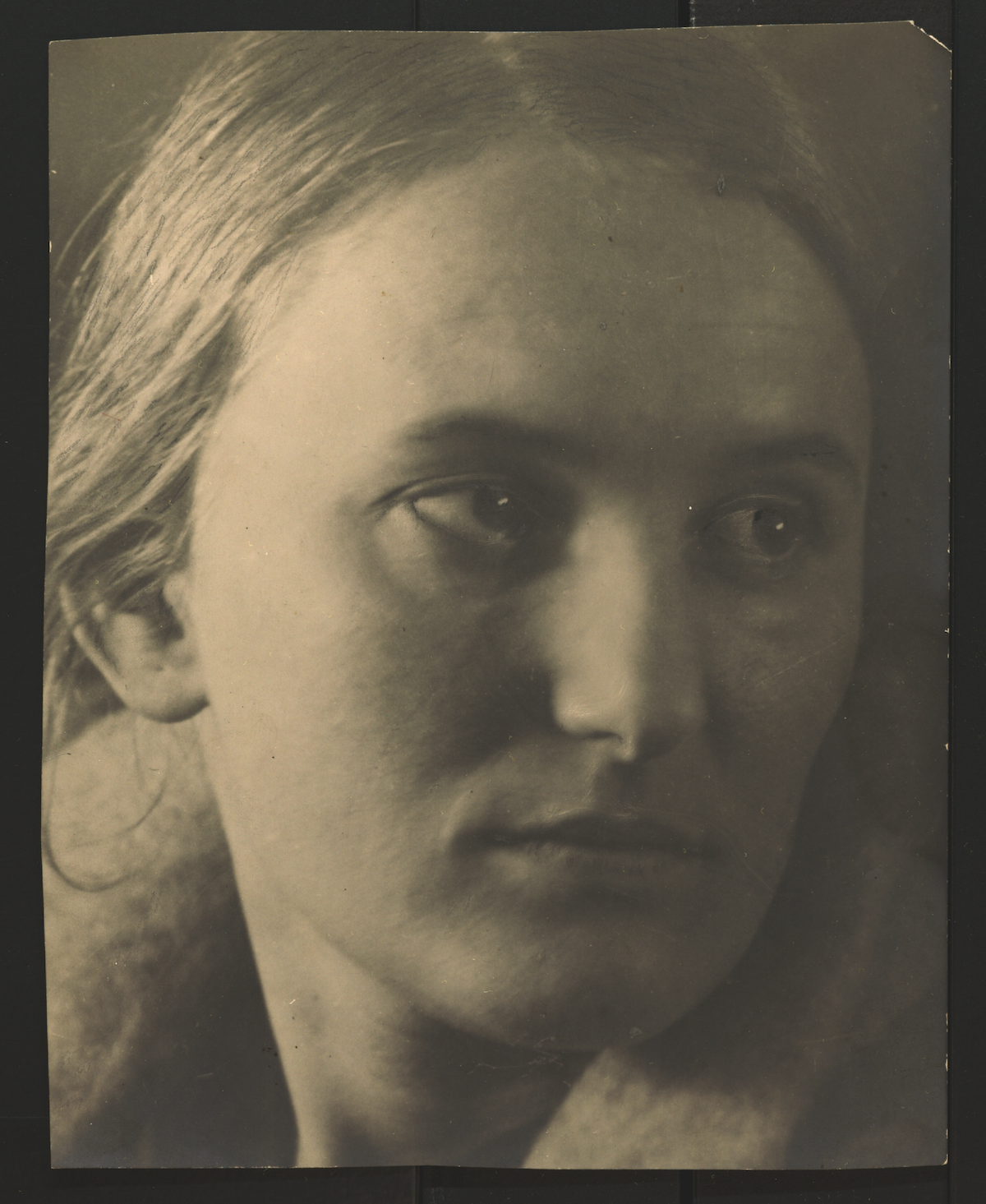
I shall not recall here (where I worked before) neither the Pathé Brothers factory, nor Vengerov and Company, nor the Skobelev Committee…¹
This is how Elizaveta Svilova opened a short autobiographical note in 1959. Her first steps in cinema were not something she chose to remember in detail; in her recollections, she consistently displaced them in favour of a later and, in her own view, more significant period of work – her collaboration with Dziga Vertov.
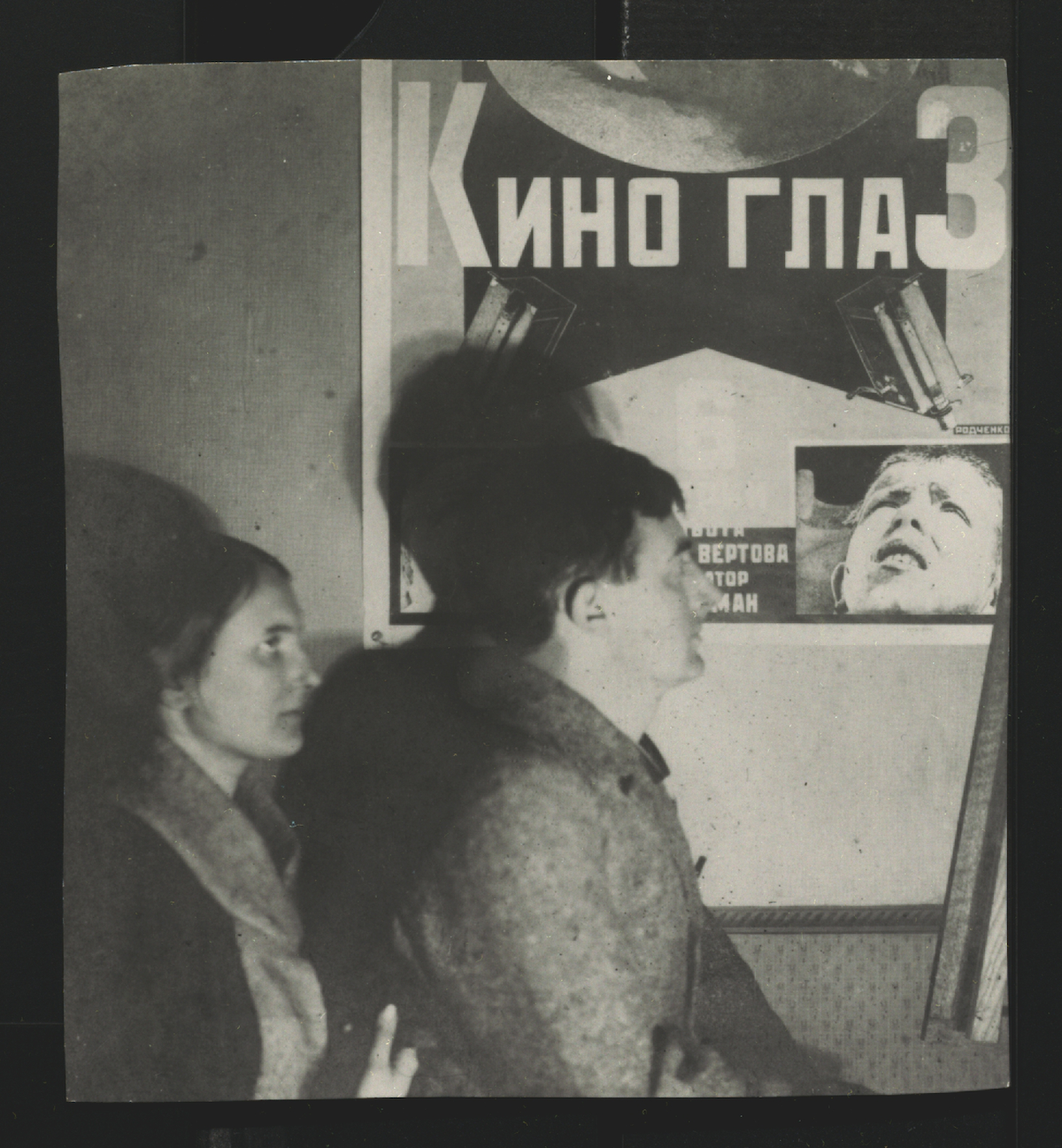
Svilova was still a young girl when, in the 1910s, she entered cinema as an apprentice assistant in the Moscow laboratory of the Pathé brothers. Her work consisted of technical operations usually relegated to the margins of film production – cutting and splicing film stock. In later accounts, she usually reduced this period to a brief statement that it was then that she learned how to work, sometimes mentioning Vladimir Gardin, with whom she frequently collaborated between 1914 and 1918. Only in one known document, a personal account dating from 1940–1941, did Svilova list the first films on which she had worked. The first title she named was Portret Doriana Greia / The Picture of Dorian Gray (1915, director Vsevolod Meyerhold).² Although Svilova left no direct reflection on her experience of working with Meyerhold (perhaps understandably, given the political repression he later faced) the film nevertheless seems to have made a profound impression on her. It stimulated her creative interest in cinema and strengthened her desire to experiment with the possibilities of editing.
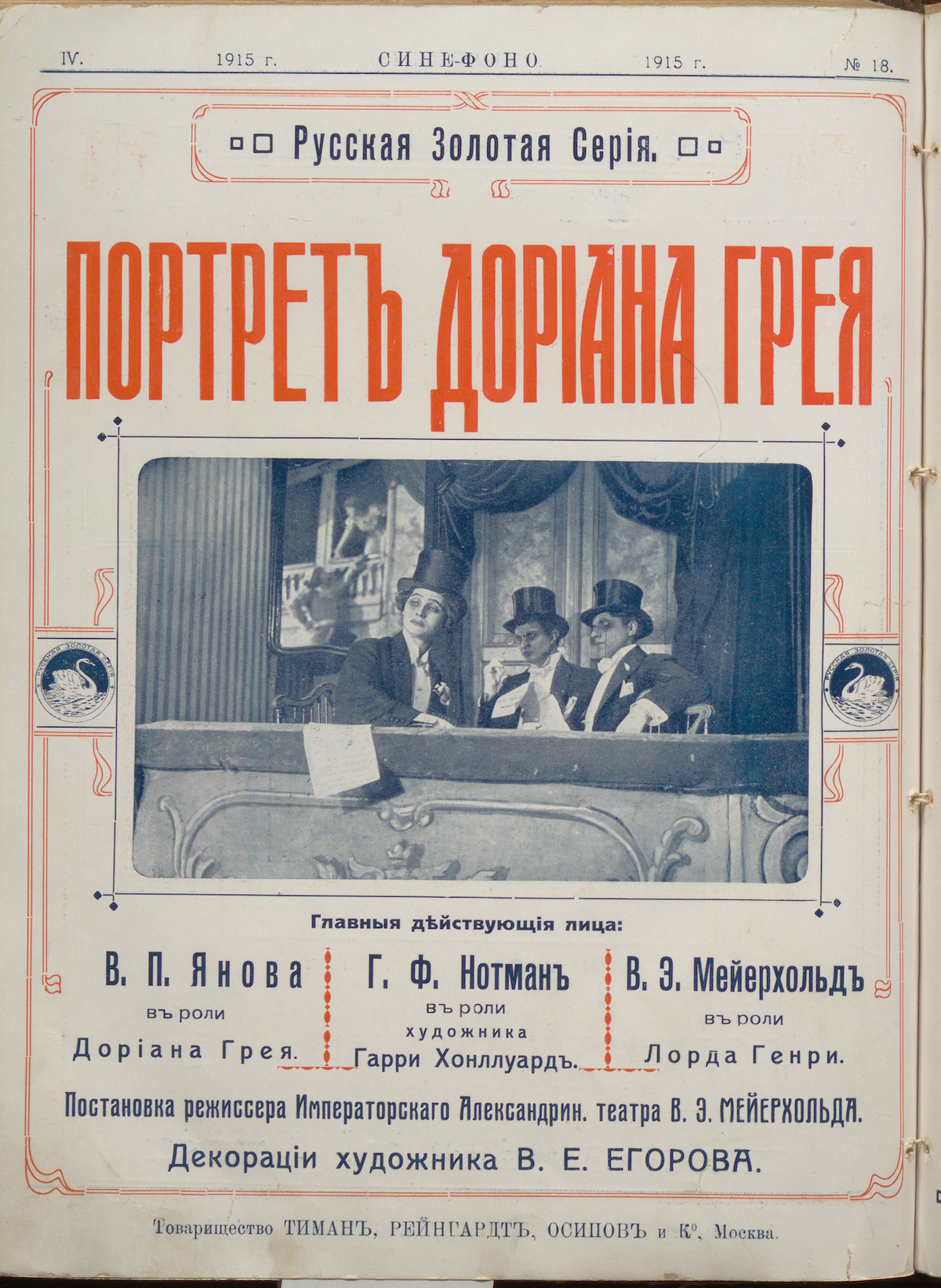
In 1975, shortly before her death, Svilova shared her memories with journalist Aleksandr Fevralskii. In his book on Meyerhold and cinema, Fevralskii writes:
At that time Svilova was fifteen years old and was working as an apprentice in the Pathé brothers’ film laboratory, located in the same courtyard as the studio of the Thiemann and Reinhardt company, at the beginning of what is now Leningradskii Prospekt and was then Petrogradskoe Shosse. The laboratory developed and printed the company’s films, and Meyerhold came there almost every day to view the positive prints of the filmed fragments on screen; at times, he asked Svilova to splice the film. Seeing that the girl was interested in what was taking place in the studio, he explained to her how a film was shot and allowed her to be present at several shoots. Once, he offered to give her a lift home in the horse-drawn cab that was taking him from the studio, and on the way he showed her Moscow.³
Portret Doriana Greia, an adaptation of Oscar Wilde’s famous novel, was a notable event in pre-revolution Russian cinema and an ambitious experiment, even if responses in the film press were mixed. Reviewers drew attention to its unusual visual design and mise-en-scène, as well as to the performances of its actors, including Meyerhold himself in the role of Lord Henry Wotton. Judging from contemporary reviews, however, the film’s editing did not depart radically from the broader tendencies of pre-revolutionary cinema, with its generally slow tempo and emphasis on carefully arranged mise-en-scènes. At the same time, cinematographer Aleksandr Levitskii later recalled certain sequences that seemed unusually dynamic and rhythmically sharp for the period.⁴ Even if Meyerhold’s approach remained deeply theatrical, the film nevertheless anticipated a question that would later become central to Soviet theories of montage: how cinematic meaning is created not only by what is shown, but by the selection and organization of images.
As Levitskii recounts, after watching the edited positive print of the film, Meyerhold observed:
Cinema may have enormous potential, <…> but at this stage it is still too far removed from conveying deep emotional experience. What is needed is not lifeless, flickering intertitles, but a living language, one characteristic of each image.⁵
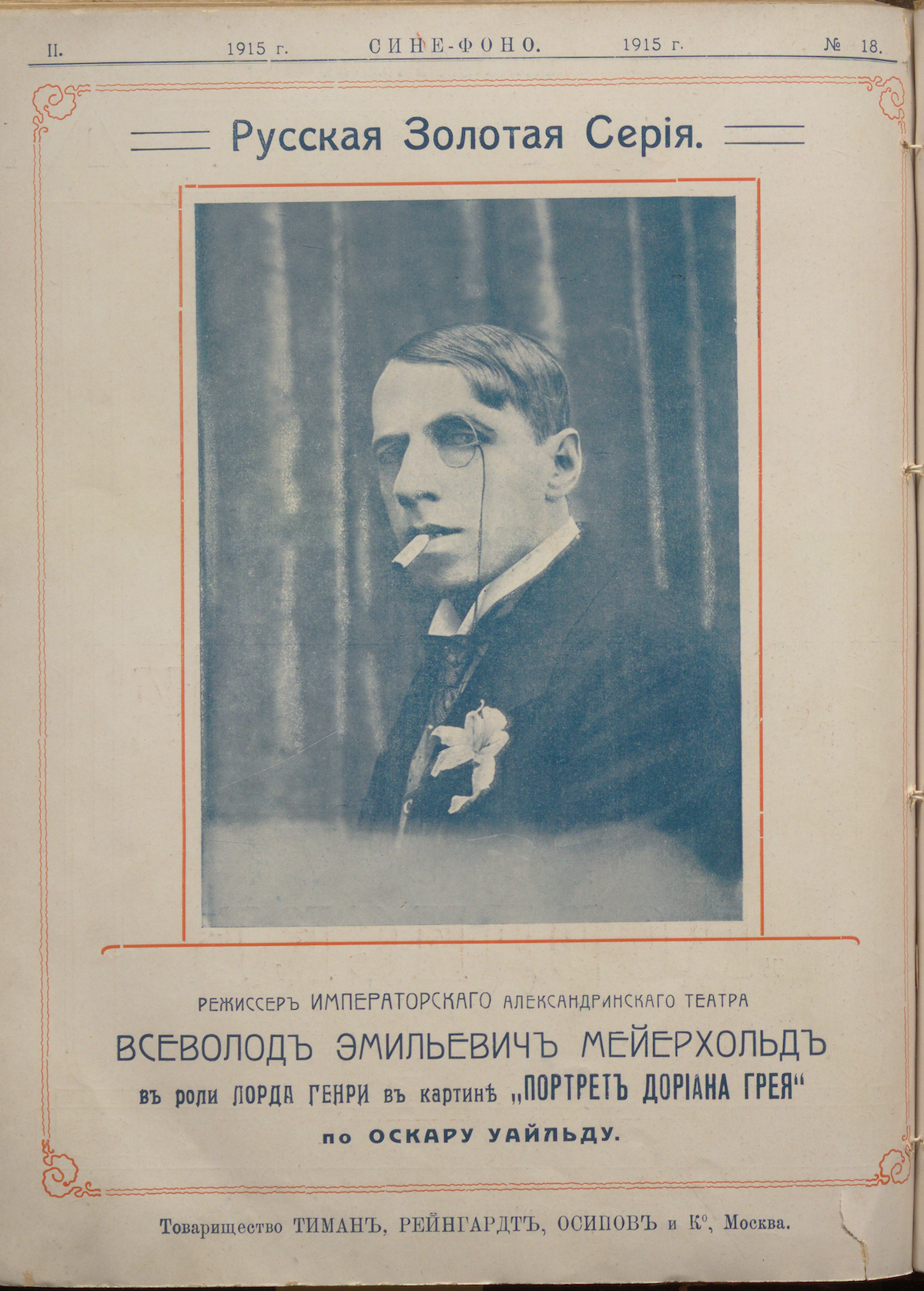
Sine-Fono, no. 18 (1915): ii.
Meyerhold’s remark shows that he was already dissatisfied with the conventional use of intertitles. He did not reject them as such; rather, he objected to their inert, merely explanatory function and sought a more expressive cinematic language in which text, image, rhythm, and performance would work together to convey the emotional force of a scene.⁶ In this respect, his thinking anticipated a broader concern of the 1920s, when Vertov, Sergei Eisenstein, Vsevolod Pudovkin, and other Soviet filmmakers increasingly treated intertitles not simply as a rudimentary device inherited from early cinema, but as an element capable of acquiring new functions within montage. For young film cutter Svilova, who was only beginning to explore the techniques and expressive possibilities of cinema, Meyerhold’s approach may have suggested that editing was not merely a technical operation, but a means of organizing cinematic meaning.
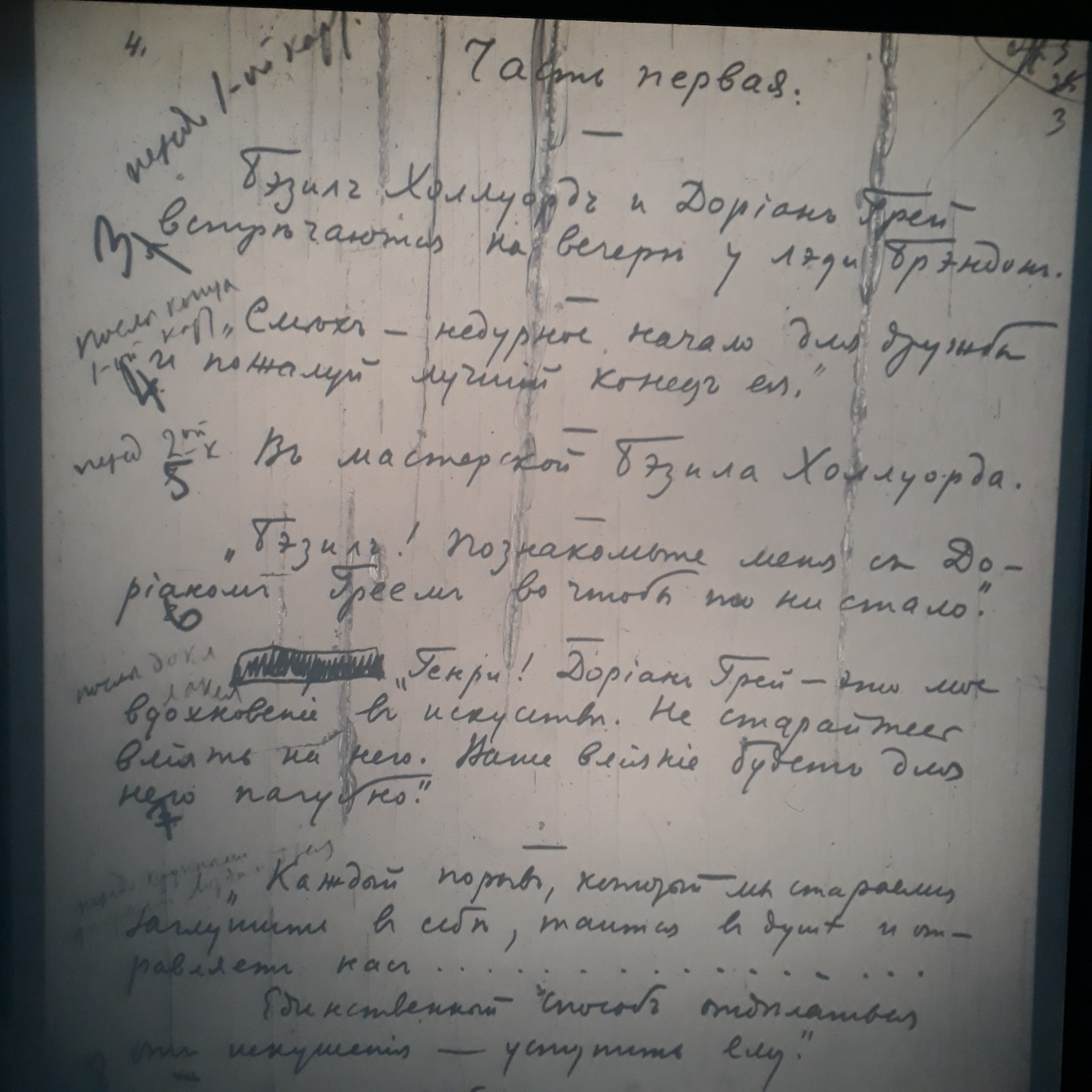
From Meyerhold’s correspondence published by Vladimir Zabrodin, we know that the woman in charge of the Dorian Gray editing was Alevtina (her last name still remains unknown), who, judging from the context, was a visible figure in Thiemann’s studio.⁷ Svilova probably was assisting this Alevtina; she was not directly involved in the production of Portret Doriana Greia, her work consisted of splicing film during post-production. Yet this brief proximity to Meyerhold opened up for her the creative possibilities of cinema that she wanted to explore further. It was after this, according to her later recollections, that Svilova saw D. W. Griffith’s Intolerance (1916) and learned it almost by heart through repeated re-editing. She understood the editing work not only as a technical supporting job, but also as a complex instrument of storytelling.
It is therefore unsurprising that, in 1919, she was the only editor in the cutting room of the All-Russian Photo-Cinema Department (VFKO) who agreed to help a young filmmaker whose montage ideas had been rejected by other women editors. That filmmaker was Dziga Vertov. He had asked the editors to cut the short non-fiction film Bitva v Tsaritsyne / The Battle of Tsaritsin (1919) according to his unusual instructions. His plan involved interrupting ordinary lengths of footage with very short frame inserts. To the editors, these fragments looked like error and amateurism, so they threw them into the bin. Svilova, however, was drawn to the young director’s unconventional approach. She seems to have been searching for ways to experiment and to move beyond the limits of routine technical labour. In her collaboration with Vertov, she found a concrete opportunity to do so. But it was her brief encounter with Meyerhold that first helped her understand editing as a creative practice.
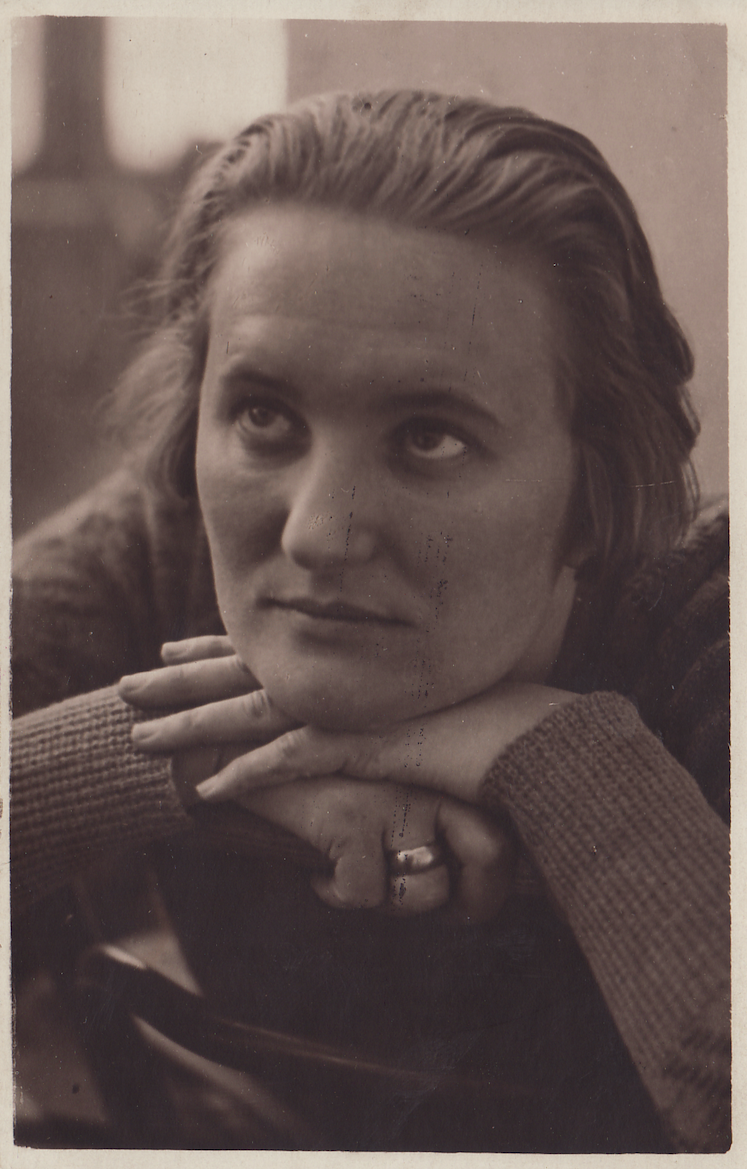
Indeed, it would be impossible to claim that Svilova’s work on Portret Doriana Greia directly or decisively influenced Vertov’s works, or the formation of his manifestos on non-fiction cinema and associative rhythmic montage. However, influence often operates invisibly: it may pass through the hands of editors, who transmit ways of seeing and thinking just as quietly as their own labour has often disappeared from film history.
Suggested Citation
Goriachok, Kirill. “Elizaveta Svilova and Meyerhold’s The Picture of Dorian Gray.” In Daydreams Database: Cinema of the Russian Empire and Beyond, edited by Anna Kovalova, developed by Alexander Grebenkov, 2026. URL: https://daydreams.museum/blog/elizaveta-svilova-and-meyerholds-the-picture-of-dorian-gray/
Elizaveta Svilova and Meyerhold’s The Picture of Dorian Gray
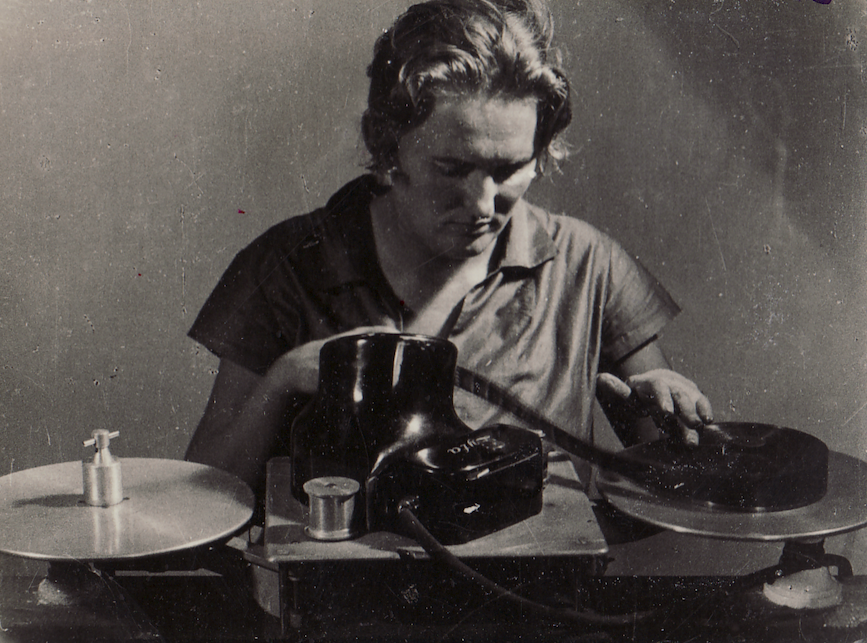
Elizaveta Svilova is among the best-known film editors of Soviet cinema. Her name is inseparable from that of her husband, director Dziga Vertov: she worked with him throughout his career and, according to modern scholarship, was the co-author of his films. Yet the story of Svilova before Vertov remains almost unknown. She was one of the barely visible figures who connected two cinematic worlds: pre-revolutionary silent cinema and new avant-garde cinema that emerged after 1917. Her career allows us to see how technical routines of early film production were transformed into a creative language of Soviet montage.
I shall not recall here (where I worked before) neither the Pathé Brothers factory, nor Vengerov and Company, nor the Skobelev Committee…¹
This is how Elizaveta Svilova opened a short autobiographical note in 1959. Her first steps in cinema were not something she chose to remember in detail; in her recollections, she consistently displaced them in favour of a later and, in her own view, more significant period of work – her collaboration with Dziga Vertov.
Svilova was still a young girl when, in the 1910s, she entered cinema as an apprentice assistant in the Moscow laboratory of the Pathé brothers. Her work consisted of technical operations usually relegated to the margins of film production – cutting and splicing film stock. In later accounts, she usually reduced this period to a brief statement that it was then that she learned how to work, sometimes mentioning Vladimir Gardin, with whom she frequently collaborated between 1914 and 1918. Only in one known document, a personal account dating from 1940–1941, did Svilova list the first films on which she had worked. The first title she named was Portret Doriana Greia / The Picture of Dorian Gray (1915, director Vsevolod Meyerhold).² Although Svilova left no direct reflection on her experience of working with Meyerhold (perhaps understandably, given the political repression he later faced) the film nevertheless seems to have made a profound impression on her. It stimulated her creative interest in cinema and strengthened her desire to experiment with the possibilities of editing.
In 1975, shortly before her death, Svilova shared her memories with journalist Aleksandr Fevralskii. In his book on Meyerhold and cinema, Fevralskii writes:
At that time Svilova was fifteen years old and was working as an apprentice in the Pathé brothers’ film laboratory, located in the same courtyard as the studio of the Thiemann and Reinhardt company, at the beginning of what is now Leningradskii Prospekt and was then Petrogradskoe Shosse. The laboratory developed and printed the company’s films, and Meyerhold came there almost every day to view the positive prints of the filmed fragments on screen; at times, he asked Svilova to splice the film. Seeing that the girl was interested in what was taking place in the studio, he explained to her how a film was shot and allowed her to be present at several shoots. Once, he offered to give her a lift home in the horse-drawn cab that was taking him from the studio, and on the way he showed her Moscow.³
Portret Doriana Greia, an adaptation of Oscar Wilde’s famous novel, was a notable event in pre-revolution Russian cinema and an ambitious experiment, even if responses in the film press were mixed. Reviewers drew attention to its unusual visual design and mise-en-scène, as well as to the performances of its actors, including Meyerhold himself in the role of Lord Henry Wotton. Judging from contemporary reviews, however, the film’s editing did not depart radically from the broader tendencies of pre-revolutionary cinema, with its generally slow tempo and emphasis on carefully arranged mise-en-scènes. At the same time, cinematographer Aleksandr Levitskii later recalled certain sequences that seemed unusually dynamic and rhythmically sharp for the period.⁴ Even if Meyerhold’s approach remained deeply theatrical, the film nevertheless anticipated a question that would later become central to Soviet theories of montage: how cinematic meaning is created not only by what is shown, but by the selection and organization of images.
As Levitskii recounts, after watching the edited positive print of the film, Meyerhold observed:
Cinema may have enormous potential, <…> but at this stage it is still too far removed from conveying deep emotional experience. What is needed is not lifeless, flickering intertitles, but a living language, one characteristic of each image.⁵
Sine-Fono, no. 18 (1915): ii.
Meyerhold’s remark shows that he was already dissatisfied with the conventional use of intertitles. He did not reject them as such; rather, he objected to their inert, merely explanatory function and sought a more expressive cinematic language in which text, image, rhythm, and performance would work together to convey the emotional force of a scene.⁶ In this respect, his thinking anticipated a broader concern of the 1920s, when Vertov, Sergei Eisenstein, Vsevolod Pudovkin, and other Soviet filmmakers increasingly treated intertitles not simply as a rudimentary device inherited from early cinema, but as an element capable of acquiring new functions within montage. For young film cutter Svilova, who was only beginning to explore the techniques and expressive possibilities of cinema, Meyerhold’s approach may have suggested that editing was not merely a technical operation, but a means of organizing cinematic meaning.
From Meyerhold’s correspondence published by Vladimir Zabrodin, we know that the woman in charge of the Dorian Gray editing was Alevtina (her last name still remains unknown), who, judging from the context, was a visible figure in Thiemann’s studio.⁷ Svilova probably was assisting this Alevtina; she was not directly involved in the production of Portret Doriana Greia, her work consisted of splicing film during post-production. Yet this brief proximity to Meyerhold opened up for her the creative possibilities of cinema that she wanted to explore further. It was after this, according to her later recollections, that Svilova saw D. W. Griffith’s Intolerance (1916) and learned it almost by heart through repeated re-editing. She understood the editing work not only as a technical supporting job, but also as a complex instrument of storytelling.
It is therefore unsurprising that, in 1919, she was the only editor in the cutting room of the All-Russian Photo-Cinema Department (VFKO) who agreed to help a young filmmaker whose montage ideas had been rejected by other women editors. That filmmaker was Dziga Vertov. He had asked the editors to cut the short non-fiction film Bitva v Tsaritsyne / The Battle of Tsaritsin (1919) according to his unusual instructions. His plan involved interrupting ordinary lengths of footage with very short frame inserts. To the editors, these fragments looked like error and amateurism, so they threw them into the bin. Svilova, however, was drawn to the young director’s unconventional approach. She seems to have been searching for ways to experiment and to move beyond the limits of routine technical labour. In her collaboration with Vertov, she found a concrete opportunity to do so. But it was her brief encounter with Meyerhold that first helped her understand editing as a creative practice.
Indeed, it would be impossible to claim that Svilova’s work on Portret Doriana Greia directly or decisively influenced Vertov’s works, or the formation of his manifestos on non-fiction cinema and associative rhythmic montage. However, influence often operates invisibly: it may pass through the hands of editors, who transmit ways of seeing and thinking just as quietly as their own labour has often disappeared from film history.
Suggested Citation
Goriachok, Kirill. “Elizaveta Svilova and Meyerhold’s The Picture of Dorian Gray.” In Daydreams Database: Cinema of the Russian Empire and Beyond, edited by Anna Kovalova, developed by Alexander Grebenkov, 2026. URL: https://daydreams.museum/blog/elizaveta-svilova-and-meyerholds-the-picture-of-dorian-gray/