Blog
Film Index
Converted Jewess and The Green Spider
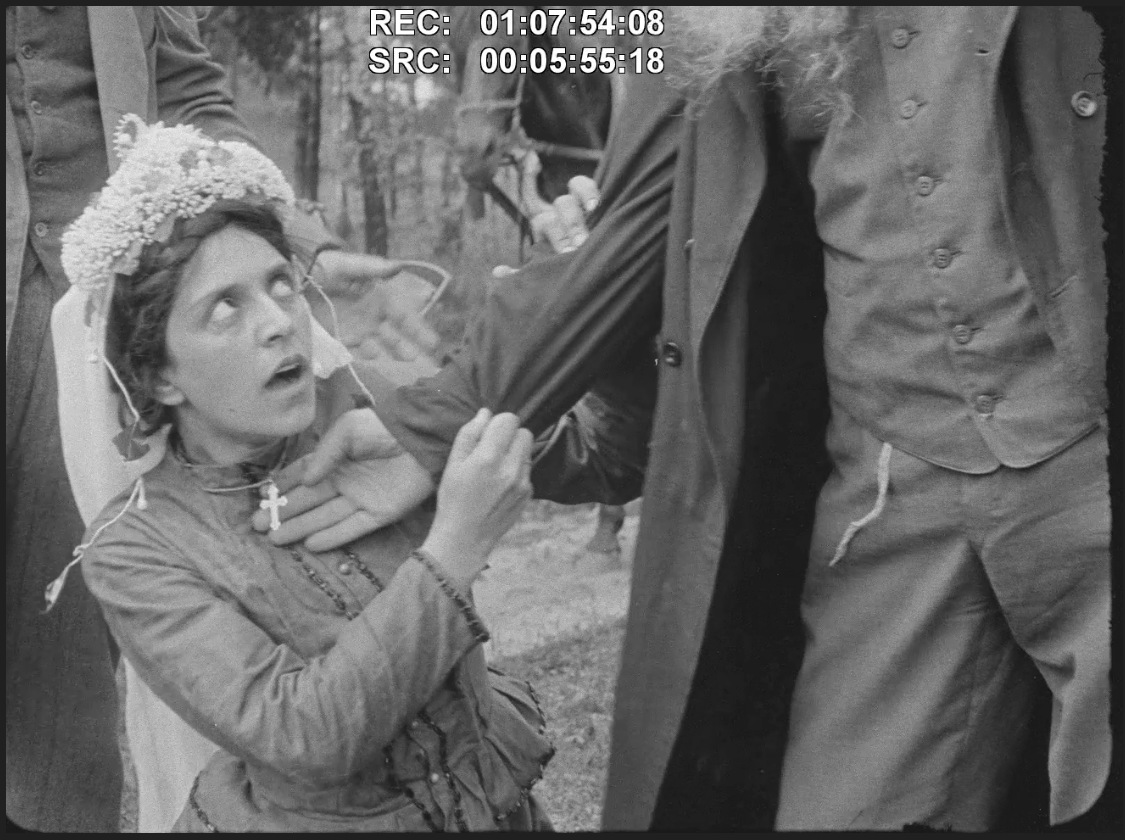
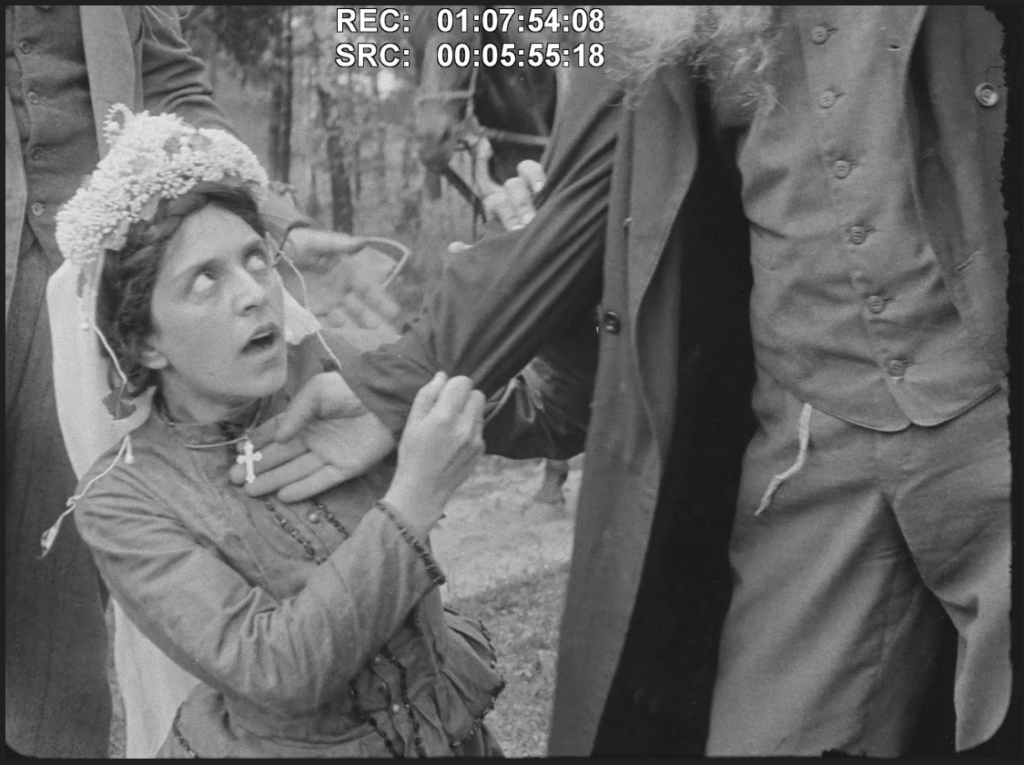
Two new films have been recently identified with the help of materials available in the Daydreams database. Zhidovka-vykhrestka / Converted Jewess (1912, Vladimir Krivtsov) was identified by Ekaterina Artemeva at the Cinémathèque française, while Zelionyi pauk / The Green Spider (1916, Alexandre Volkoff) was identified by Alexandra Ustyuzhanina at Gosfilmofond of Russia.
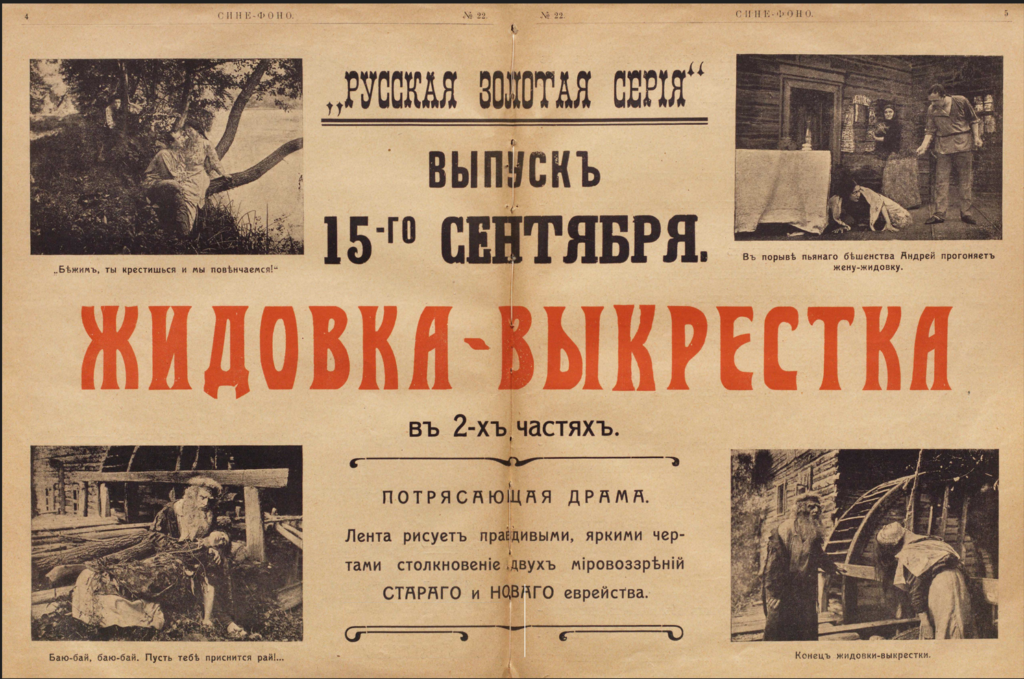
Zhidovka-vykhrestka belongs to an influential subgenre of imperial Russian cinema, the so-called “drama of the Jewish life.” The genre emerged in 1910 with the release of L’Khaim by the Pathé Brothers. L’Khaim was an enormous success. As one contemporary critic observed: “I know many people who, although they hardly ever went to motion-picture theaters, were drawn there solely because of this film.”¹ Set in a Jewish shtetl, L’Khaim aimed to reflect Jewish religious and cultural traditions that were largely unfamiliar to non-Jewish audiences across the Russian Empire. This glimpse into a social and cultural world that many spectators knew little about presumably contributed to the film’s appeal. Following its success, several production companies began releasing films on similar subjects, giving rise to the flourishing “drama of the Jewish life,” which remained an important strand of Russian film production until approximately 1914.
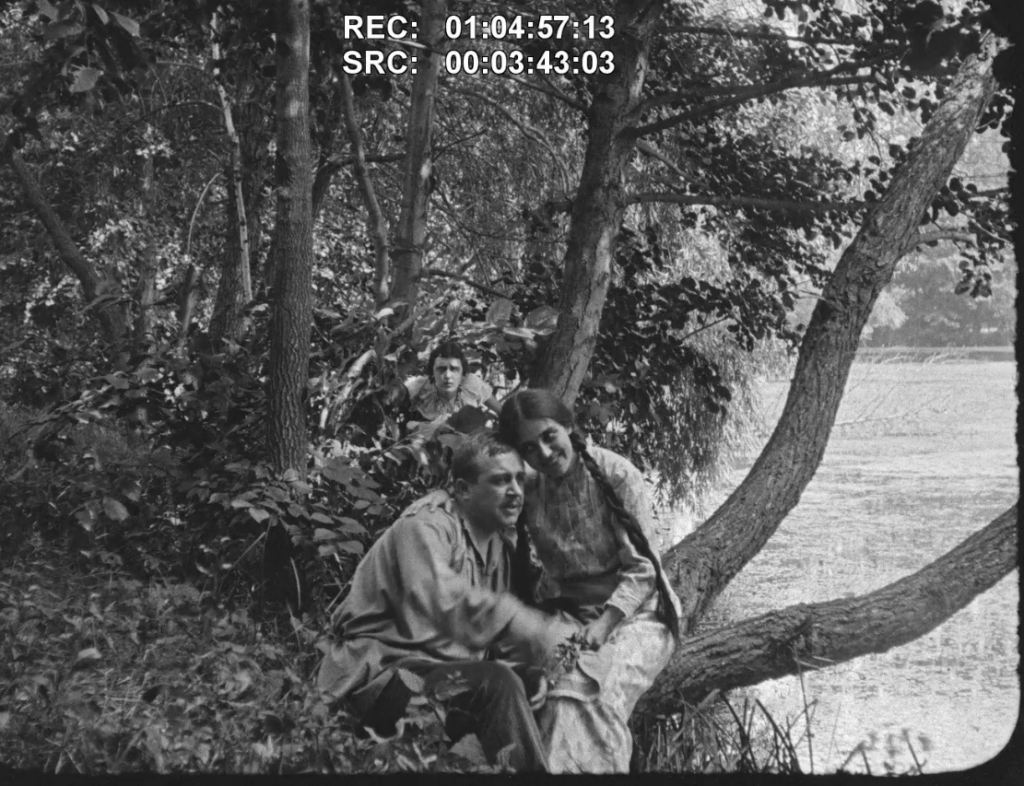
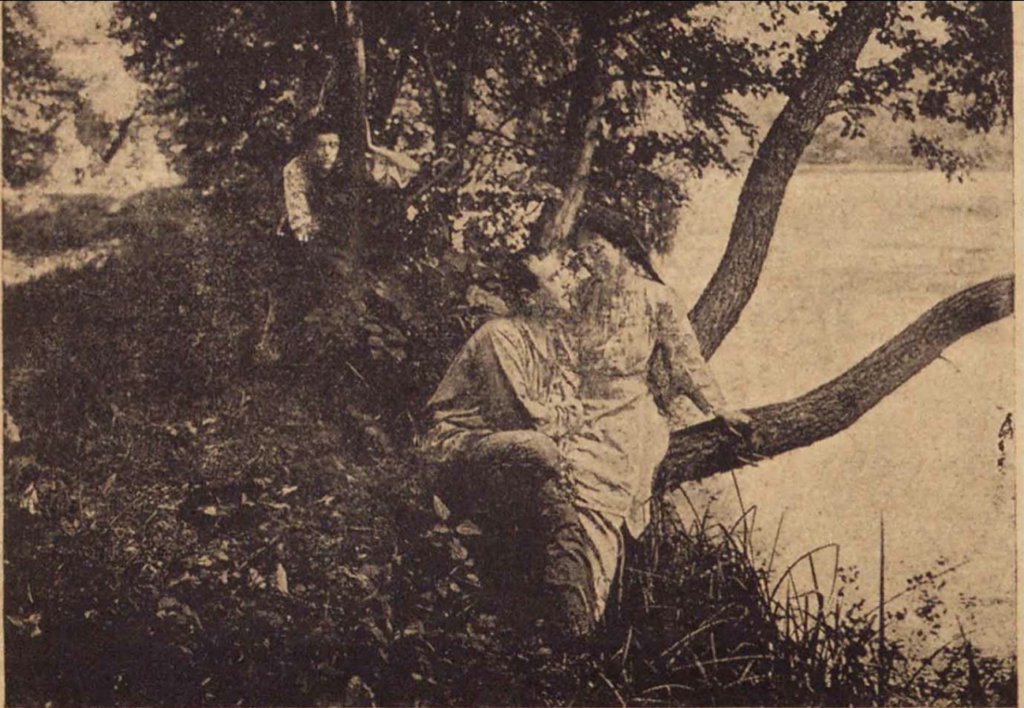
Among the surviving traces of this once-popular subgenre, Zhidovka-vykhrestka is particularly fascinating for several reasons. First, it featured two major stars of imperial Russian cinema, Maria Goricheva and Vladimir Shaternikov. Second, Samuil Lurie, editor-in-chief of the leading pre-revolutionary film trade journal Sine-Fono, singled out the film’s visual qualities, praising its “magnificent photography and, in particular, the lighting effects, which demonstrate that the camera crank is being turned by an experienced cinematographer.”² The praise was well deserved: the film was shot by the celebrated Italian cinematographer Giovanni Vitrotti, who worked in the Russian Empire for the Thiemann and Reinhardt company. Last but not least, Zhidovka-vykhrestka was adapted from the play of the same title by the Ukrainian playwright Ivan Tohobochnyi (1907). The film was also shot on location at Syrets, then on the outskirts of Kyiv and today one of the city’s neighborhoods. Its rediscovery is therefore significant not only for the history of Jewish representation on the early screen, but also for scholars of early Ukrainian cinema and the remarkably diverse world of filmmaking in the late Russian Empire.
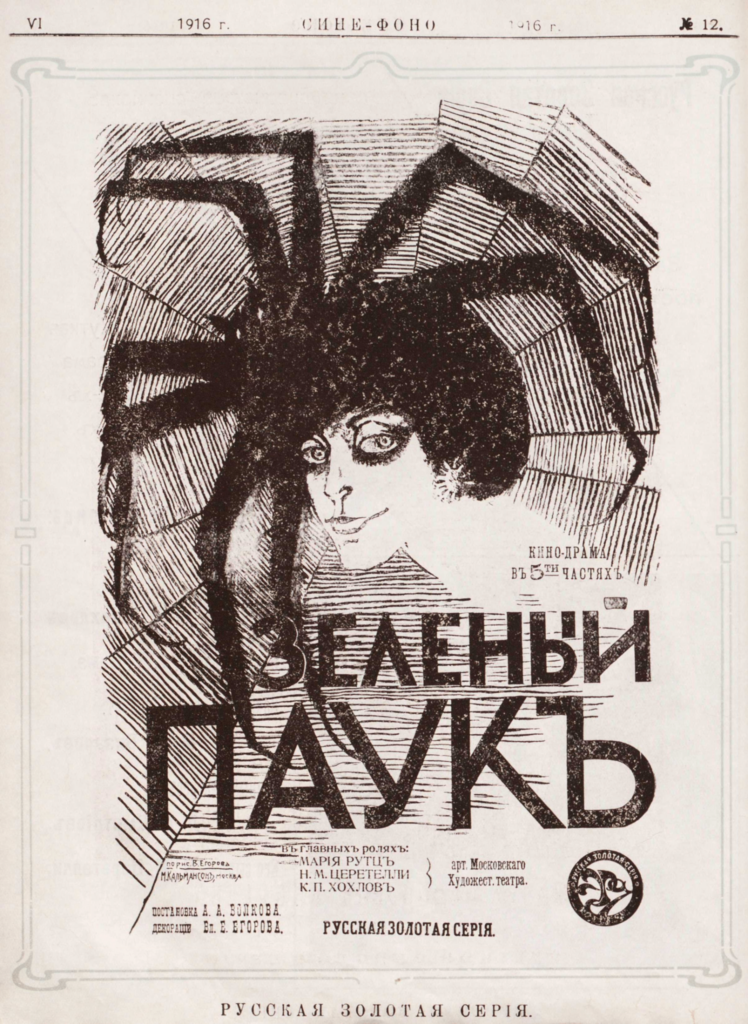
Zelionyi pauk, directed by Alexandre Volkoff, survives as a short fragment in the collection of Rudolf Kohts at Gosfilmofond of Russia. The collection was assembled over several decades by Kohts, a scientist who worked at the Pavlov Institute and was closely involved with the film collection of the Darwin Museum in Moscow. In 2018, film historian and archivist Peter Bagrov contacted Kohts’s son Petr, who subsequently donated his father’s collection to Gosfilmofond, where Bagrov was working at the time. Among its predominantly scientific and educational films were two 35mm nitrate compilation reels containing unidentified fragments of Russian and foreign films.
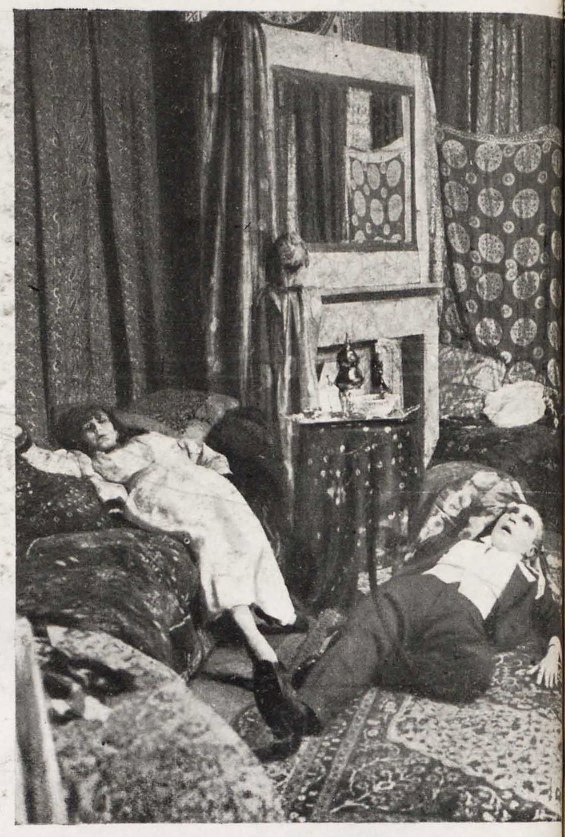
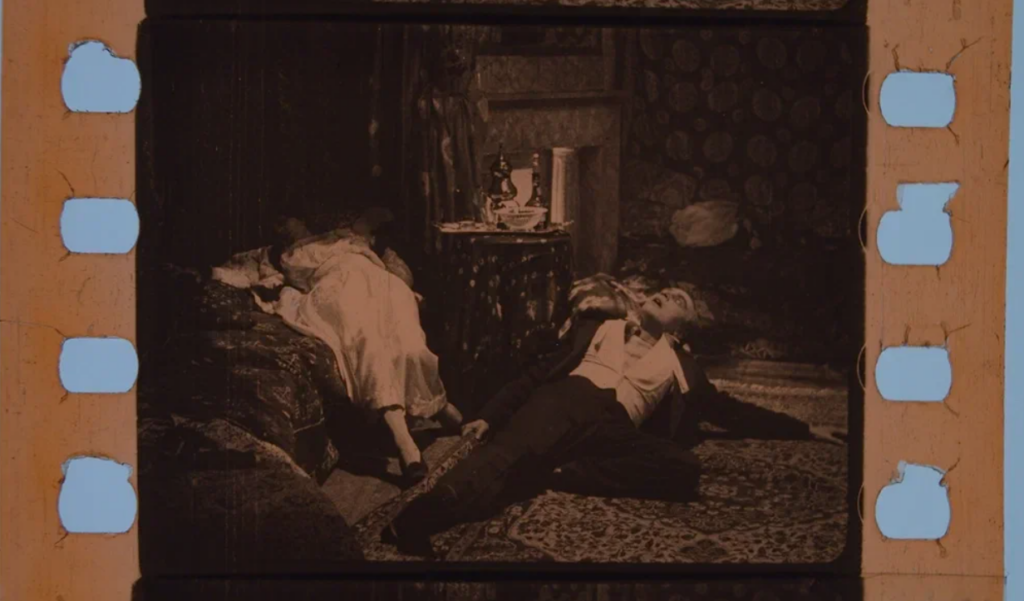
The identification of Zelionyi pauk was made by Alexandra Ustyuzhanina, who was working with one of these compilation reels. She noticed that an actor in one fragment resembled Konstantin Khokhlov, whom she knew from Evgenii Bauer’s Nabat / Tocsin (1917). After checking Khokhlov’s filmography, Ustyuzhanina compared the fragment with promotional stills available in the Daydreams database. One of the images on the Zelionyi pauk page corresponded almost exactly to the scene preserved in the Kohts print. A comparison with the film’s libretto confirmed the identification and established that the surviving footage was, in fact, the film’s finale.
It is hardly possible to fully contextualize the film in a short research note. Yet, it is helpful to keep in mind that Zelionyi pauk was directed by Alexandre Volkoff, who later became one of the key figures in the celebrated Russian émigré cinema and therefore entered the canon of European film. Another prominent figure involved in the Zelionyi pauk production was Vladimir Egorov, a major production designer of both pre-revolutionary and Soviet cinema. These details make the archival discovery of the film previously considered lost even more valuable.
We sincerely thank our colleagues at the Cinémathèque française, especially Taibi Mehdi, for their generous assistance with this research note.
Suggested Citation
Kovalova, Anna, and Alexandra Ustyuzhanina. “Converted Jewess and the Green Spider.” In Daydreams Database: Cinema of the Russian Empire and Beyond, edited by Anna Kovalova, developed by Alexander Grebenkov, 2026. URL: https://daydreams.museum/en/blog/converted-jewess-and-the-green-spider/.
Converted Jewess and The Green Spider
Two new films have been recently identified with the help of materials available in the Daydreams database. Zhidovka-vykhrestka / Converted Jewess (1912, Vladimir Krivtsov) was identified by Ekaterina Artemeva at the Cinémathèque française, while Zelionyi pauk / The Green Spider (1916, Alexandre Volkoff) was identified by Alexandra Ustyuzhanina at Gosfilmofond of Russia.
Zhidovka-vykhrestka belongs to an influential subgenre of imperial Russian cinema, the so-called “drama of the Jewish life.” The genre emerged in 1910 with the release of L’Khaim by the Pathé Brothers. L’Khaim was an enormous success. As one contemporary critic observed: “I know many people who, although they hardly ever went to motion-picture theaters, were drawn there solely because of this film.”¹ Set in a Jewish shtetl, L’Khaim aimed to reflect Jewish religious and cultural traditions that were largely unfamiliar to non-Jewish audiences across the Russian Empire. This glimpse into a social and cultural world that many spectators knew little about presumably contributed to the film’s appeal. Following its success, several production companies began releasing films on similar subjects, giving rise to the flourishing “drama of the Jewish life,” which remained an important strand of Russian film production until approximately 1914.
Among the surviving traces of this once-popular subgenre, Zhidovka-vykhrestka is particularly fascinating for several reasons. First, it featured two major stars of imperial Russian cinema, Maria Goricheva and Vladimir Shaternikov. Second, Samuil Lurie, editor-in-chief of the leading pre-revolutionary film trade journal Sine-Fono, singled out the film’s visual qualities, praising its “magnificent photography and, in particular, the lighting effects, which demonstrate that the camera crank is being turned by an experienced cinematographer.”² The praise was well deserved: the film was shot by the celebrated Italian cinematographer Giovanni Vitrotti, who worked in the Russian Empire for the Thiemann and Reinhardt company. Last but not least, Zhidovka-vykhrestka was adapted from the play of the same title by the Ukrainian playwright Ivan Tohobochnyi (1907). The film was also shot on location at Syrets, then on the outskirts of Kyiv and today one of the city’s neighborhoods. Its rediscovery is therefore significant not only for the history of Jewish representation on the early screen, but also for scholars of early Ukrainian cinema and the remarkably diverse world of filmmaking in the late Russian Empire.
Zelionyi pauk, directed by Alexandre Volkoff, survives as a short fragment in the collection of Rudolf Kohts at Gosfilmofond of Russia. The collection was assembled over several decades by Kohts, a scientist who worked at the Pavlov Institute and was closely involved with the film collection of the Darwin Museum in Moscow. In 2018, film historian and archivist Peter Bagrov contacted Kohts’s son Petr, who subsequently donated his father’s collection to Gosfilmofond, where Bagrov was working at the time. Among its predominantly scientific and educational films were two 35mm nitrate compilation reels containing unidentified fragments of Russian and foreign films.
The identification of Zelionyi pauk was made by Alexandra Ustyuzhanina, who was working with one of these compilation reels. She noticed that an actor in one fragment resembled Konstantin Khokhlov, whom she knew from Evgenii Bauer’s Nabat / Tocsin (1917). After checking Khokhlov’s filmography, Ustyuzhanina compared the fragment with promotional stills available in the Daydreams database. One of the images on the Zelionyi pauk page corresponded almost exactly to the scene preserved in the Kohts print. A comparison with the film’s libretto confirmed the identification and established that the surviving footage was, in fact, the film’s finale.
It is hardly possible to fully contextualize the film in a short research note. Yet, it is helpful to keep in mind that Zelionyi pauk was directed by Alexandre Volkoff, who later became one of the key figures in the celebrated Russian émigré cinema and therefore entered the canon of European film. Another prominent figure involved in the Zelionyi pauk production was Vladimir Egorov, a major production designer of both pre-revolutionary and Soviet cinema. These details make the archival discovery of the film previously considered lost even more valuable.
We sincerely thank our colleagues at the Cinémathèque française, especially Taibi Mehdi, for their generous assistance with this research note.
Suggested Citation
Kovalova, Anna, and Alexandra Ustyuzhanina. “Converted Jewess and the Green Spider.” In Daydreams Database: Cinema of the Russian Empire and Beyond, edited by Anna Kovalova, developed by Alexander Grebenkov, 2026. URL: https://daydreams.museum/en/blog/converted-jewess-and-the-green-spider/.